One more day of heat to endure, then …
 |
| Blackberries are ripening quickly in the heat. (Photos: Kathy Morrison) |
Use the coming cooler weather to your garden’s advantage
Everyone who’s ready for this heat to end, raise your hands! Good, now fan yourself. That’s a little better. And Friday brings real relief, as overnight temperatures drop back into the 60s. By the weekend the overnights will return to the 50s, with daytime highs in the low 80s.
We even have a chance of thunderstorms and rain showers Friday night into Saturday morning, the National Weather Service is reporting.
So our gardens should recover. Be sure to do a reconnaissance Friday morning, or this evening when it’s cooler, keeping these things in mind:
— Heat stress and temps over 95 shut down a lot of vegetable production, especially tomatoes. Those plants will need some time to recover before they start setting again. Pollinators also are less active in heat, but usually perk up faster than the plants do, so they should be busy again Friday. Honeybees and birds will appreciate a water source in the garden, by the way.
 |
|
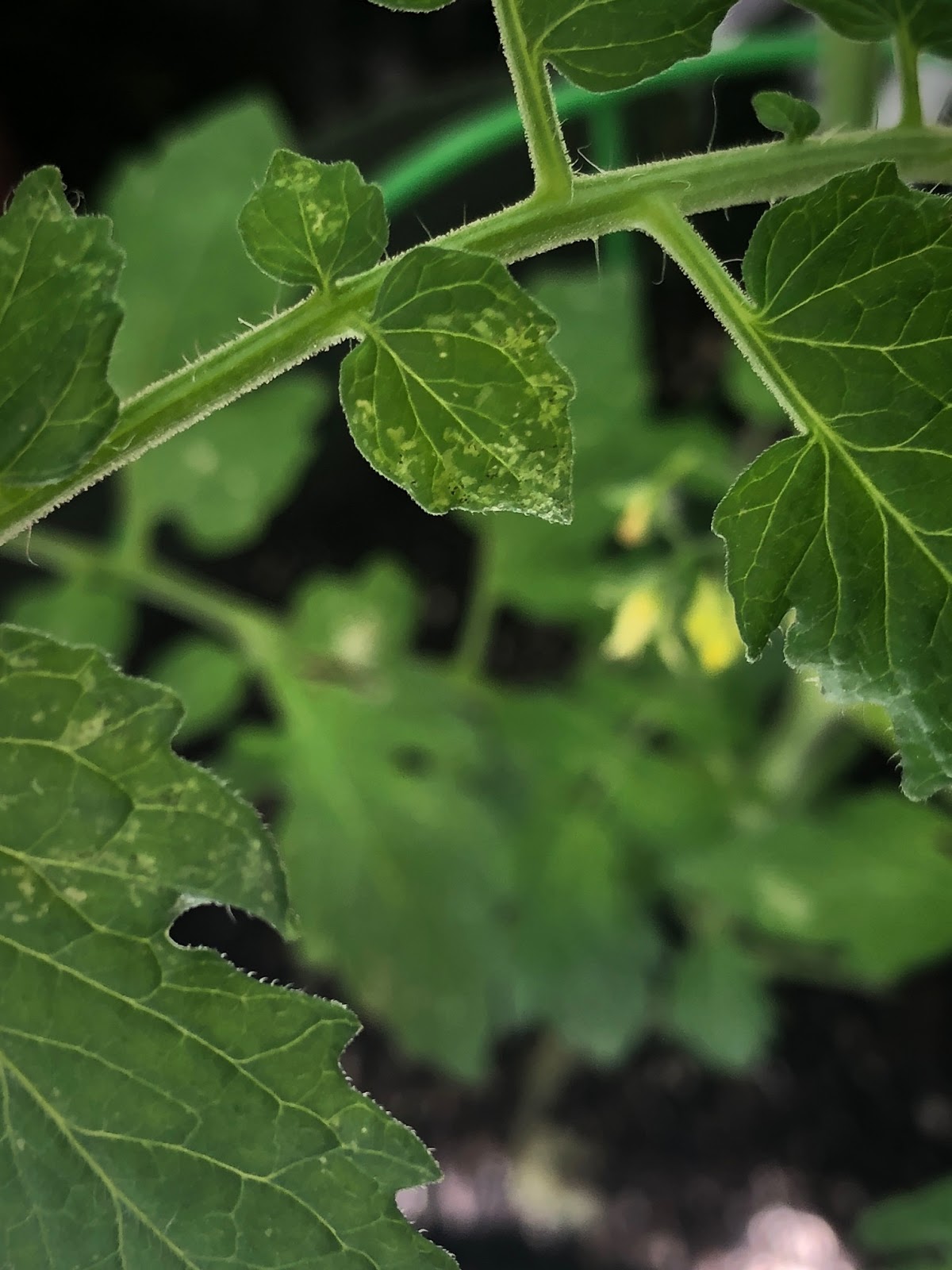
Stippling on leaves is the first clue to the presence of spider mites. |
— Spider mites thrive in hot, dusty conditions and are attracted to heat-stressed plants. Tomatoes and beans are some of their favorites, so check the leaves of those plants. If you see stippling, give the leaves (top and underside) a vigorous spritz of water with the hose sprayer. Water discourages these pests, and believe me, you don’t want them to take hold this early in the season. We have more heat ahead of us this summer. And please do not reach for a broad-spectrum pesticide, which will also kill off the beneficial insects that like to dine on these pests. For more on spider mites, read
Debbie’s post from earlier this month
.
— Check berries, which might be ripening faster than expected, thanks to the heat.
— Make a note of any plant that’s having a really hard time in this heat wave. It might need relocating, if it’s getting too much sun. If that’s impossible, there’s always what Farmer Fred Hoffman calls “shovel pruning.” Life’s too short to put up with a difficult plant, right? (And if you want to search for a replacement, here’s an excellent site for looking up plants, categorized by water usage in each region of the state:
WUCOLS
, which stands for Water Use Classification of Landscape Species.)
— If the troubled plant is in a pot, maybe the soil has dried out too much. Plop that pot into a large bucket of water for a good soak, but don’t forget to take it out to drain. Another possibility is that it’s root-bound and needs a larger container. Move it into the shade, if possible, but don’t transplant it now — wait for the cooler weather this weekend.


