November rose care: Time for one more round
 |
|
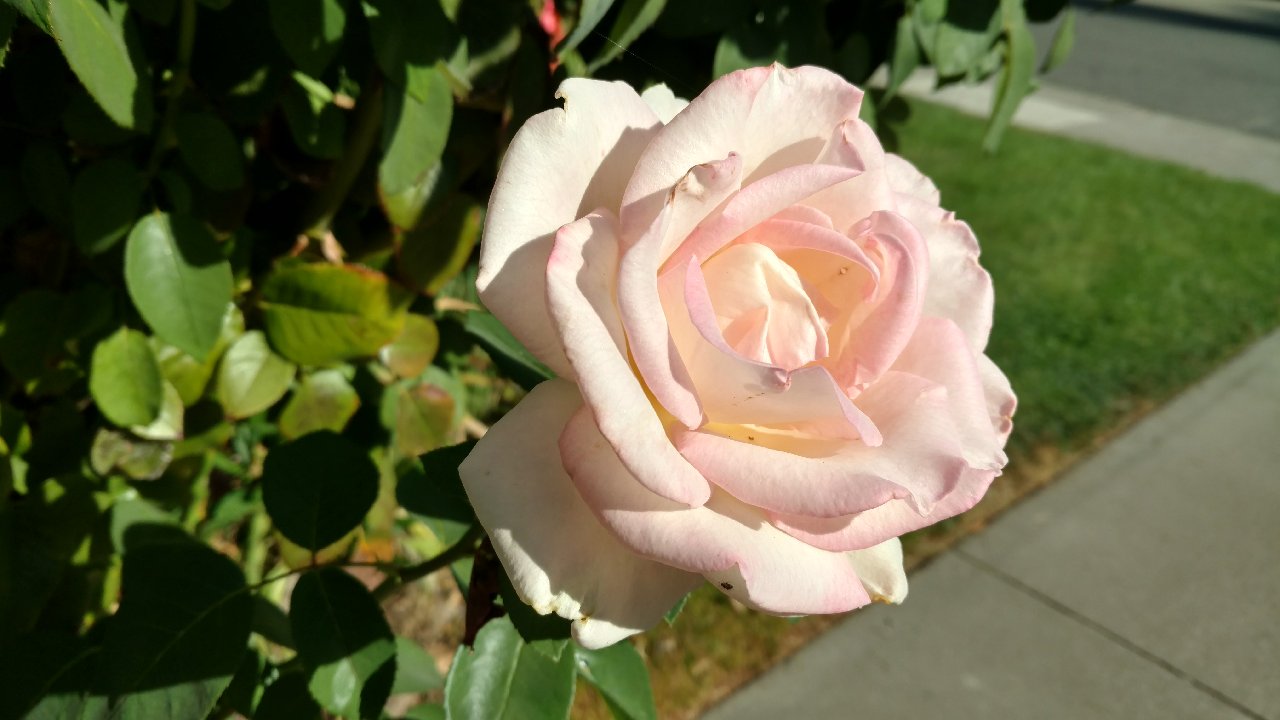
The Pink Promise hybrid tea rose promises more to come. (Photos: Debbie Arrington) |
 |
|
Bees appreciate November roses, such as this Betty Boop. |
Our recent warm weather has given gardeners a bonus: More beautiful roses.
Relatively free of fungal disease thanks to above-average heat, roses are still growing and blooming vigorously. Even the bugs are taking a break.
So, now comes decision time: Do you “deadhead” to encourage more flowers? Or do you let this round of roses be 2020’s last?
Usually in Sacramento, November is last call for roses. Spent blooms are left on the bush to mature into rose hips, the plant’s fruit. It’s a biological signal to the bush that its work is done for the year. Once rose hips form, the bush tends to go into winter dormancy and drops its leaves. Then, it can be pruned – and the whole cycle starts again.
But recent weather has been so warm, bushes think it’s September, not November. They’re not slowing down and most show no signs of leaning toward dormancy and winter’s sleep.
So, snip off spent blooms (what rose folks call deadheading) and water bushes deeply. Make the cut just above a five-leaf leaflet. But skip any fertilizer; too lush of new growth attracts aphids and whiteflies.
 |
|
Once rose hips form, the bush tends to go into winter dormancy.
|
After this grooming, one more round of rosebuds will appear. The new blooms will open six to eight weeks after deadheading – just in time for holiday bouquets.
Besides making lovely and welcome late-season bouquets, these late fall roses also serve another purpose: Bee food. Flowers tend to become scarce in November. Bees appreciate having this extra source of pollen and nectar.
Don’t worry if this extra round of roses will throw off your pruning schedule. By mid-December, temperatures should be cool enough to naturally coax bushes into dormancy without much effort. Then, prune in January and early February.


