Enticing pollinators to the garden
 |
|
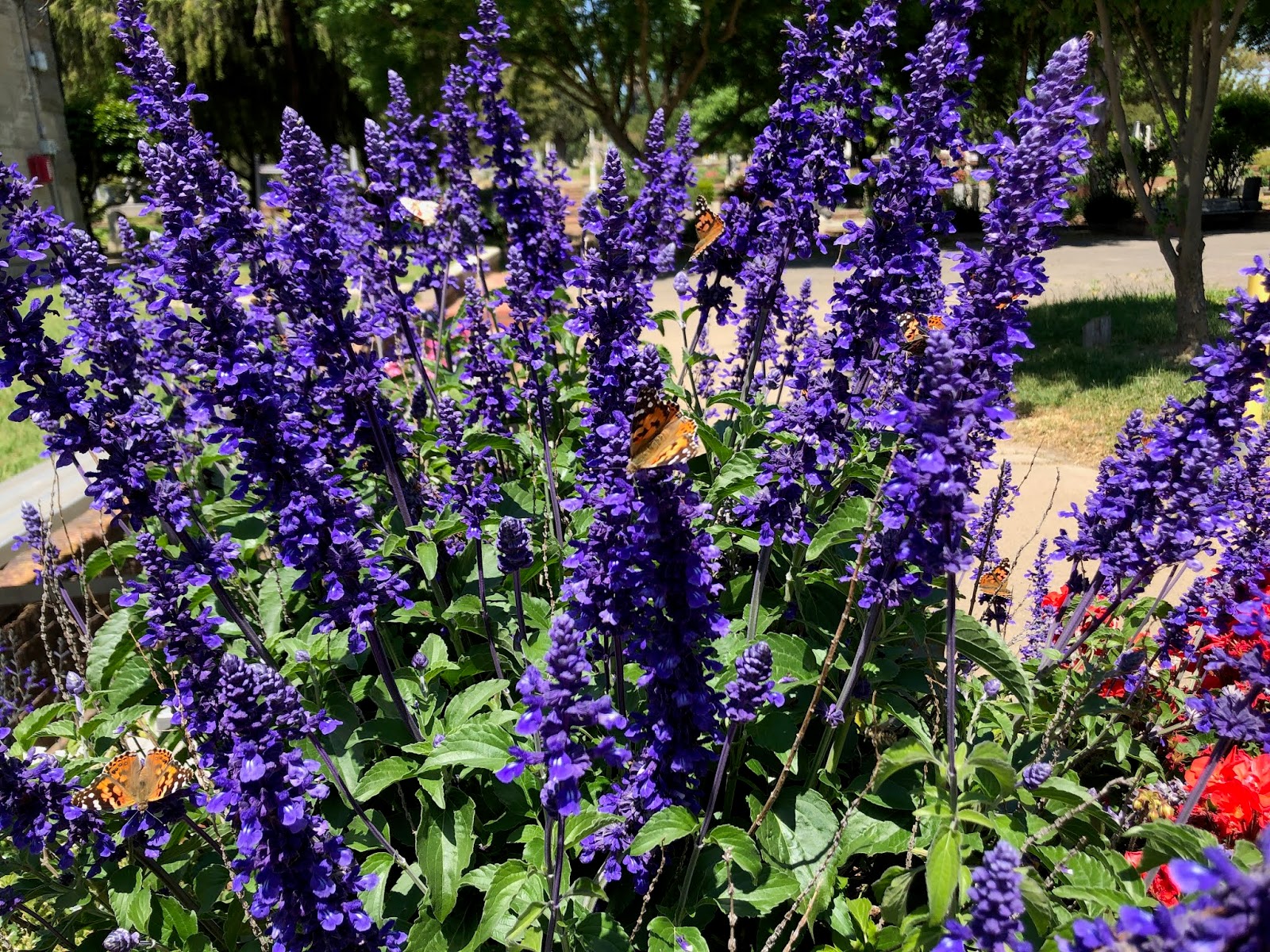
Butterflies flit in the salvia at the Historic City Cemetery. Grow plants that pollinators like and they will follow. (Photos: Kathy Morrison) |
It’s not just bees we want to stick around
 |
|
Coreopsis is an excellent bee-attractant.
|
The coreopsis hummed along with the honey bees. A big gold carpenter bee attached itself to a flower spike, reminding me of Winnie-the-Pooh wiggling in delight at his favorite treat. And there were so many butterflies in the salvia that the tall purple stalks looked like they had sprouted wings.
Bees
 |
| Oh, boy, do bees love sunflowers. Plant seeds now! |
Did you know that California has more than 1,600 species of native bees? The honey bee was imported, and has been hurt by colony collapse disease, but the native bees are out there, too. They range from the big carpenter bees to tiny sweat bees.
Bees like yellow flowers, especially, but also gravitate to purple and blue. For flowers, plant alyssum, coreopsis, cosmos, Iceland poppies, seaside daisies, sunflowers and wallflowers. Flowering herbs such as basil, bee balm, borage, lavender, rosemary and thyme also are good.
native plants for bees
.
Butterflies
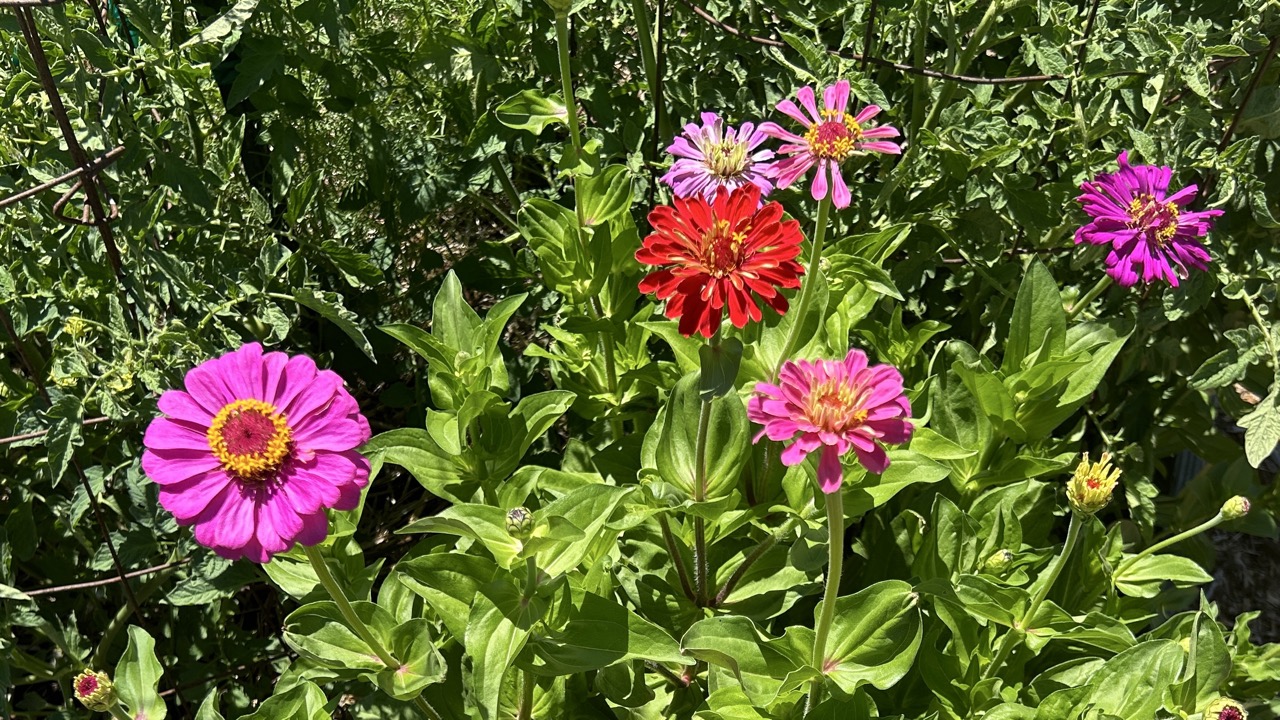
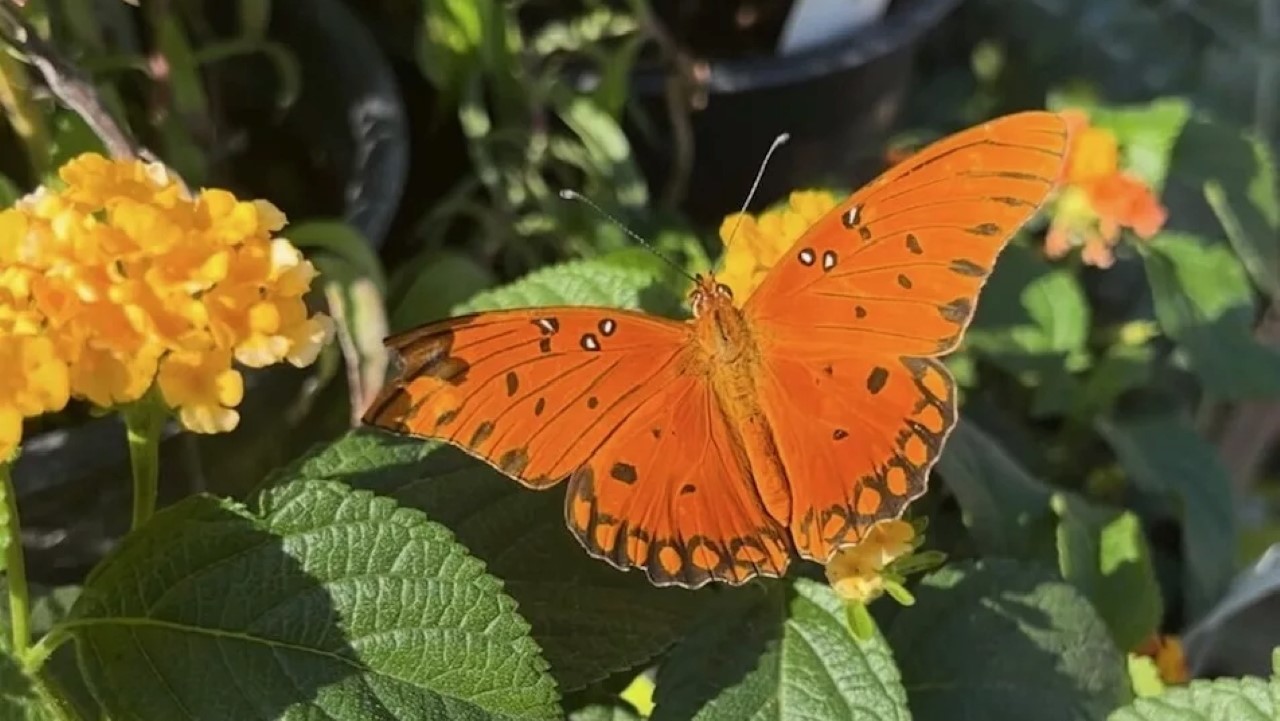
Butterflies need a place to land when they feed — they can’t hover like bees and hummingbirds. They love the big-bloom zinnias, for example, but will also appreciate asters, calendula, coneflowers, cosmos, Shasta and other daisies, gaillardia, lantana, marigolds, scabiosa (pincushion plant) and yarrow.
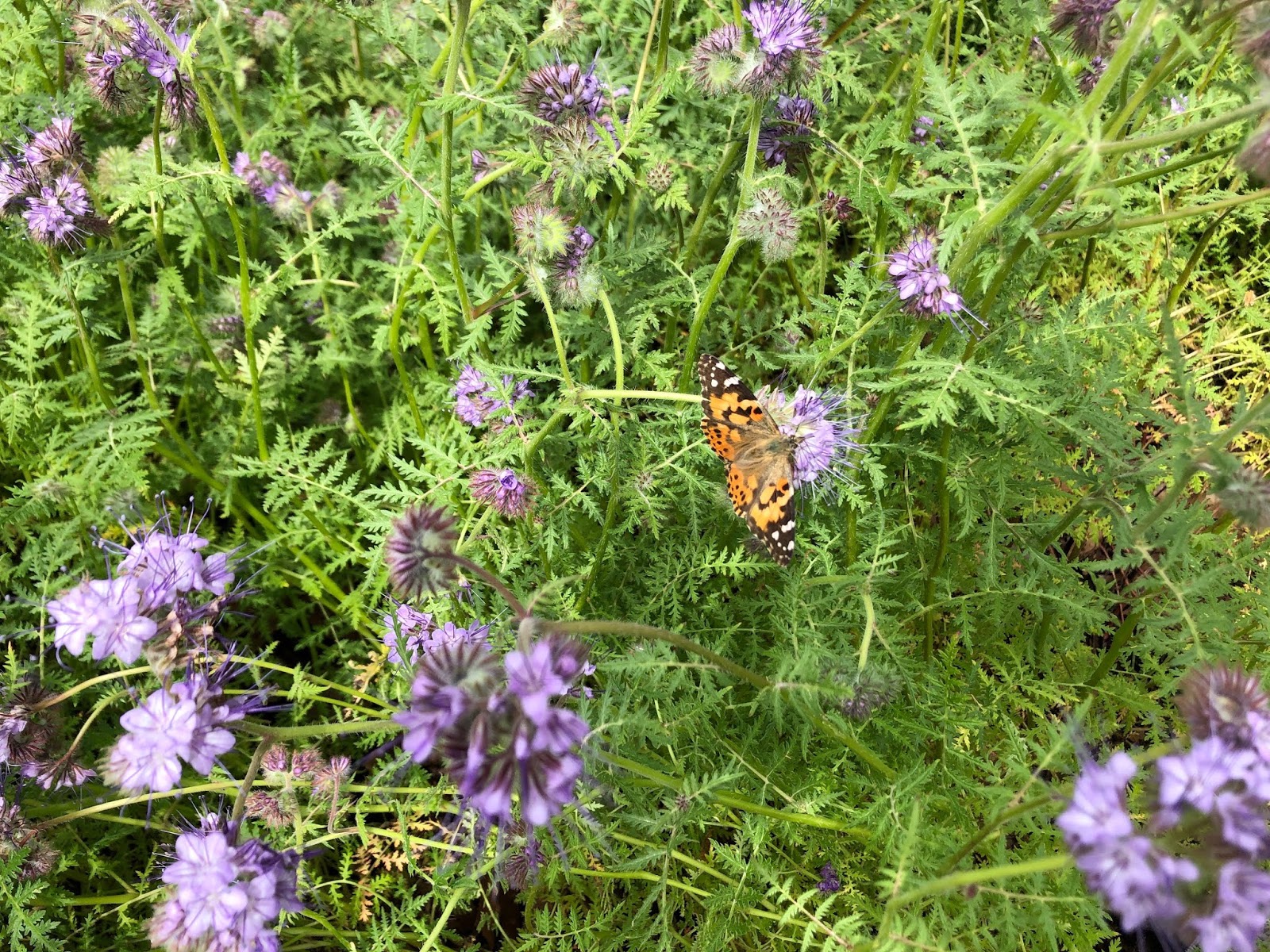 |
| This butterfly just couldn’t quit the lacy phacelia. |
Native plants are even more important to butterflies than to bees, I think. Earlier this spring I watched a painted lady butterfly just about lose its mind in a patch of native lacy phacelia (
phacelia tanacetofolia
). It would fly away and circle back, fly away and circle back again, as if it was hooked on what the plant had to offer and couldn’t leave just yet.
Birds
Hummingbirds are perhaps the most obvious pollinators — they get right into the blooms. They love trumpet-shaped flowers such as petunias and calibrachoa (often called “Million Bells”), but they also go nuts for salvias that bloom red, such as the “Hot Lips” variety or pineapple sage.
Other birds can be pollinators, too, so don’t fuss too much if they poke holes in your sunflower leaves. They are fruit thieves, of course, but they’re also helping the garden stay healthy by eating grasshoppers, crickets and tomato hornworms that can plague our vegetable crops.
Other pollinators
Wasps and some moths and flies also contribute to life in the garden. Hover flies, also known as syrphid flies, are the most active of the pollinating flies. These flies, which resemble bees, like small flowers but are also drawn to orange and yellow blooms, such as calendula and marigolds. (Another garden benefit: The larvae of hover flies feed on aphids.)
 |
| This dragonfly is on stakeout. |
Dragonflies aren’t known as pollinators but they do prey on mosquitoes, so they are a gardener’s friend, too. Give them some 5-foot poles or stakes in the garden; they like to land on them and watch for prey.
(
This post expands on a story Kathy originally wrote for her community garden’s newsletter
.)