Dig In: Garden checklist for week of June 23
On the first weekend of summer, our gardens (and our air-conditioning systems) are getting a quick heat test.
According to the National Weather Service, this heat spike will fade quickly. But our above-average warmth is not leaving completely.
A heat advisory stays in effect until 8 p.m. Saturday (June 22) with high temperatures of 100 to 106 degrees expected in the Sacramento Valley, says the weather service. Although only Saturday is expected to reach triple digits, warm nights will let that heat linger.
Sunday starts a downward trend into the mid to low 90s. Thursday’s forecast of 92 is the coolest day in the seven-day forecast. Night-time temperatures will stay comfortably in the low 60s.
Average for this week: Highs of 88 and lows of 56.
Many summer vegetables (and weeds) love these warm temperatures and will be growing rapidly. Warm nights promote warm soil and rapid seed germination; it’s time to plant more squash and melons.
Get to work in the mornings while it’s still cool.
* Irrigate early in the day; your plants will appreciate it.
* Generally, tomatoes need deep watering two to three times a week, but don’t let them dry out completely. That can encourage blossom-end rot.
* Let the grass grow longer. Set the mower blades high to reduce stress on your lawn during summer heat. To cut down on evaporation, water your lawn deeply during the early hours of the morning, between 2 and 8 a.m.
* Tie up vines and stake tall plants such as gladiolus and lilies. That gives their heavy flowers some support.
* Dig and divide crowded bulbs after the tops have died down.
* Feed summer flowers with a slow-release fertilizer.
* Mulch, mulch, mulch! This “blanket” keeps moisture in the soil longer and helps your plants cope during hot weather.
* Avoid pot “hot feet.” Place a 1-inch-thick board under container plants sitting on pavement. This little cushion helps insulate them from radiated heat.
* Thin grapes on the vine for bigger, better clusters later this summer.
* Cut back fruit-bearing canes on berries.
* Feed camellias, azaleas and other acid-loving plants. Mulch to conserve moisture and reduce heat stress.
* Cut back Shasta daisies after flowering to encourage a second bloom in the fall.
* Trim off dead flowers from rose bushes to keep them blooming through the summer. Roses also benefit from deep watering and feeding now. A top dressing of aged compost will keep them happy. It feeds as well as keeps roots moist.
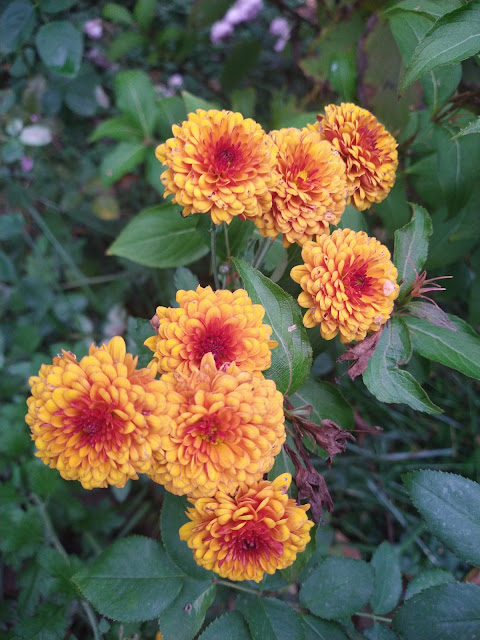
* Pinch back chrysanthemums for bushier plants with many more flowers in September.
* From seed, plant corn, pumpkins, radishes, melons, squash and sunflowers.
* Plant basil to go with your tomatoes.
* Transplant summer annuals such as petunias, marigolds and zinnias.
* It’s also a good time to transplant perennial flowers including astilbe, columbine, coneflowers, coreopsis, dahlias, rudbeckia, salvia and verbena.