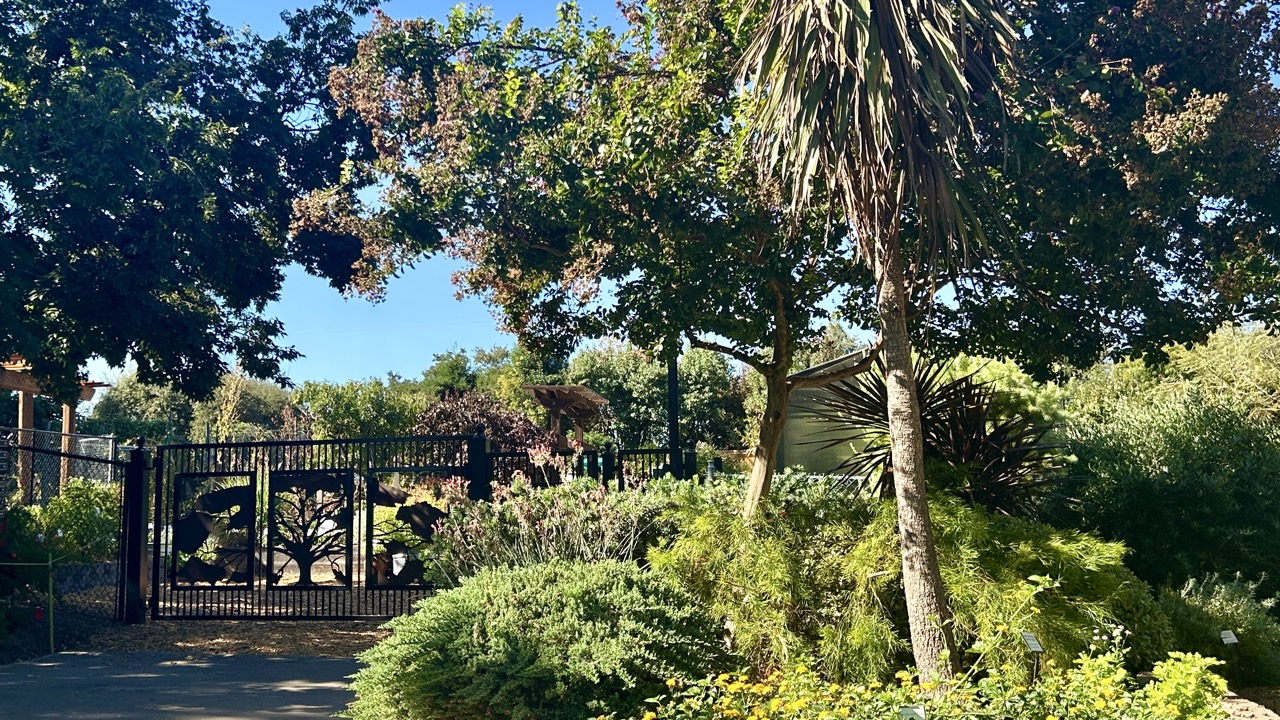
In appreciation of the crape myrtle
How drab the height-of-summer landscape would be without crape myrtle trees.
One of my three crape myrtles is blooming its head off. The light pink blossoms weigh down the branches so much that I emerge with a crown of flowers when I walk underneath. The purple-flowering tree in front and the violet-pink one in back will be showing their colors soon.
Two of these trees were here when we bought our house; I added the third crape myrtle to shade a window.
(Wait, isn’t that spelled CREPE myrtle?)
Well, yes, both spellings are correct, but I see that the online Florida company that sells these trees exclusively calls itself The Crape Myrtle Company. So we’ll go with that.
I had to laugh when I looked through their catalog: There’s a miniature variety, blooming bright deep red, called the Sacramento. It grows to just 2 feet tall. That size would be easy to tuck under the standard variety, rather than the more commonly planted agapanthus.
I do enjoy these trees. They’re not too tall, they provide great shade and color in summer, and their roots behave. In winter they pretty much disappear — except for that pretty bark — so what daylight we get is not blocked.
My childhood house had a hedge of classic hot-pink crape myrtles, grown as bushes. We played with the buds, squeezing them until they popped open.
But not everyone is a fan. Maybe the trees were not planted in the right location, spilling their blossoms all over the sidewalk or cars. Some varieties are susceptible to powdery mildew. Sometimes they attract aphids, which can mean sticky honeydew and sooty mold ruining the look of the plant.
But the worst problem with these trees is caused by humans: “crape murder.” That’s the severe pruning of the trees, supposedly to control the size and/or increase blooming. I particularly hate the pruning that, after a few years, leaves knobby “knuckles”on the tree, from which a “witch’s broom” of weak branches sprouts.
I found an excellent description of this crime — and how to remedy it — on the Southern Living website here:
Now, I know crape myrtles are not natives. Blooming native trees of the same size include the desert willow; we may see more of those in landscapes as native plants gain wider acceptance.
But our hot summers would be less colorful without crape myrtles, and it always cheers me to see them in bloom. I don’t even mind brushing all those pink blossoms out of my hair.