Looking for a bargain? Plant bare root
They look funny (because we’re not used to naked roots) and kind of counterintuitive (don’t plants need soil to live?), but they may be the best garden bargains you’ll find all year.
It’s bare-root season, which means nurseries are sporting sawdust-filled bins packed with dormant trees, shrubs and perennials. That sawdust helps protect those naked roots and keep them moist while the plants are out of the ground and “sleeping.”
Bare-root season allows growers and retail nurseries to save money, and some of those savings are passed onto buyers. Fruit trees, roses and other shrubs are dug up from growing fields in fall, then chilled in temperature-controlled warehouses; that pushes them into dormancy while keeping them fresh. They chill until they’re ready to ship to customers in winter.
Before or after shipping, growers and nurseries don’t have to repot bare-root stock. That saves on shipping costs (a bare-root fruit tree weighs a fraction of a tree in a pot full of soil) as well as time and labor.
The real bonuses are for the buyer. So much of a plant’s potential garden success is dependent on strong roots and here’s an opportunity to check them out. If bought in person, the plant can be inspected from top to bottom. Ideally, choose a tree or shrub with multiple, undamaged roots.
Another plus: Bare-root plants acclimate much faster than similar plants, transplanted from pots. Those naked roots can’t wait to get growing in their new surroundings. That gives the plant a head start on getting established (key to drought survival).
In addition, customers get more plant for their money. Bare-root fruit trees and roses are usually at least 3 years old; they’re mature plants. If bought in a pot, they’d cost significantly more.
Selection – especially of fruit trees, berries or roses – is never better than bare-root season. Nurseries don’t have physical space to keep lots of different varieties in stock in pots. But bare-root season allows for a full spectrum of varieties including many not available at any other time of year.
For fruit lovers, bare-root season is time to create your own diverse orchard or add favorites to your landscape. Among the fruit and nut trees available bare root: almond, apple, apricot, aprium, cherry, fig, jujube, mulberry, peach, pear, persimmon, plum, pluot and walnuts. This is also the time to find “fruit basket” trees with multiple varieties grafted onto the same trunk.
Both wine and table grapes are available bare root as well as many kinds of berries including blueberry, blackberry, boysenberry, currant, strawberry and raspberry. Perennial food plants such as horseradish and rhubarb are sold bare root, too.
Before transplanting, remember to give your new bare-root plant a drink. It can become dehydrated after so many weeks out of the ground. Soak the plant’s roots in a bucket or tub of water overnight.
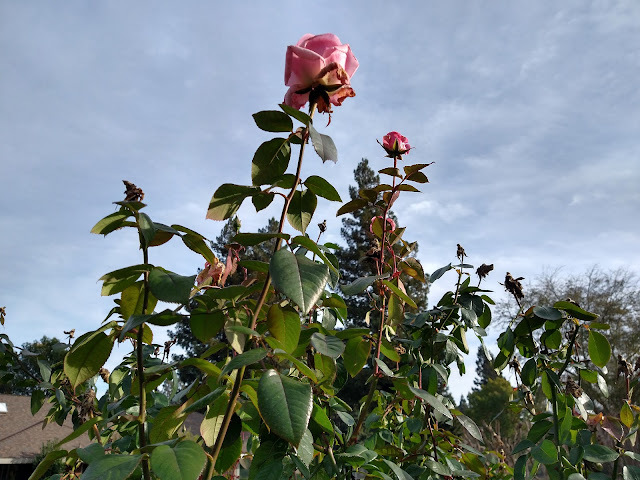
For tips on selecting bare-root roses: https://bit.ly/3GlSuLb