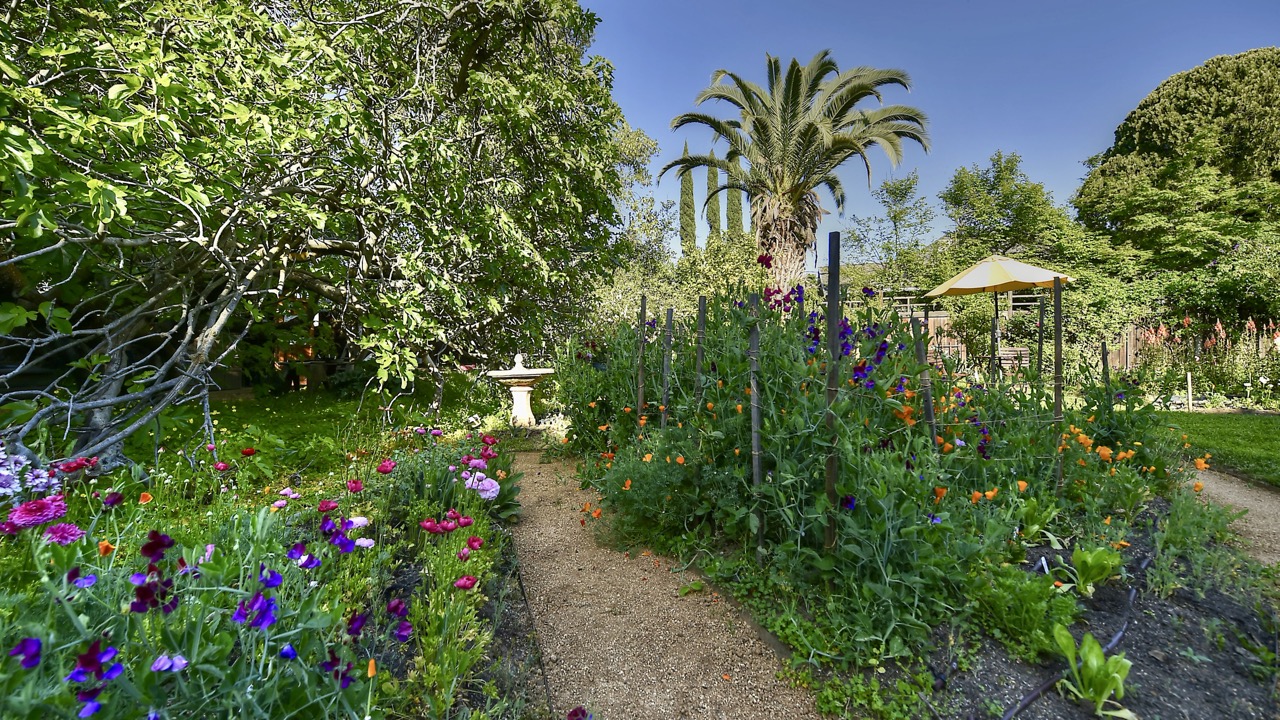
Be a friend to pollinators — it’s mutually beneficial
What’s your favorite pollinator?
If you said “bee,” here’s the perfect time to get specific. It’s International Pollinator Week, through Sunday, celebrating and supporting pollinator health.
Honeybees are pollinators, of course, but they’re not native to the Uniated States. California has more than 1,600 identified bee species — all but a handful are native. Then of course there are flies, wasps, butterflies, bats, beetles, moths and birds that do the important work of pollinating plants and crops.
I’m fond of the little green sweat bees, but don’t see them as often as I do the big lumbering carpenter bees that frequent my ‘Hot Lips’ salvia plant.
Whatever your favorite, pollinators are important to us. They provide one of every three bites of food we eat, according to the Pollinator Partnership, but they are threatened by urban growth, climate change and loss of habitat.
Here is the Partnership’s guide for helping pollinators:
— Plant a range of flowering plants, especially natives. (Pollinators need food through the seasons, so successful pollinator gardens always have something blooming.)
— Reduce or eliminate your contribution to the use of pesticides. (Psst: Eliminate it! Pesticides too easily hurt the good bugs, too.)
— Reach out to others — inform and inspire! (Get the neighbors to plant for pollinators, too.)
— Support local bees and beekeepers.
— Conserve all of our resources. Use less and reduce your impact. (That organic waste bucket is being used, right?)
— Support the work of groups promoting science-based practical efforts for pollinators.
For more information and inspiration, explore the resources at the UC Davis Bee Haven website, the Insect Connect website (part of the University of California Division of Agriculture and Natural Resources) or the Pollinator Partnership at pollinator.org