Warm weather speeds up need for rose pruning
 |
|
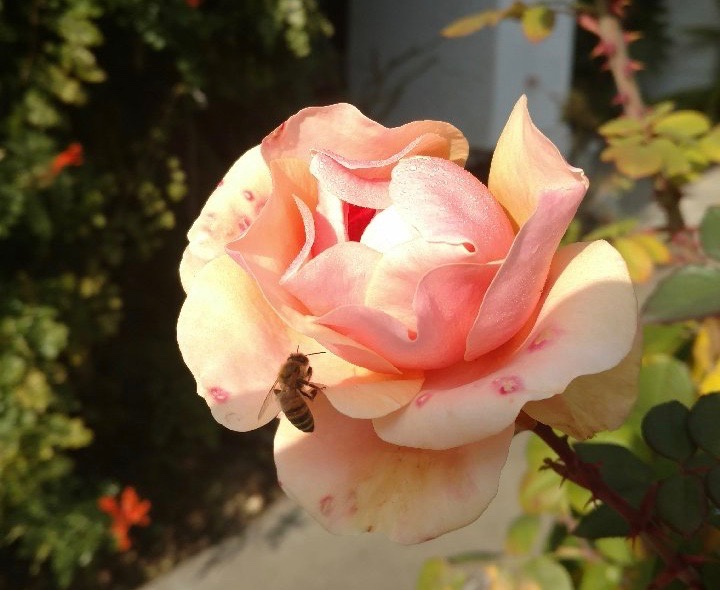
This bee appreciates a Marilyn Monroe rose blooming in mid-January. However, roses need to be stripped of all foliage now to prevent fungal infections in the spring. (Photos: Debbie Arrington) |
Nature is putting pressure on plants — and us gardeners.
All this unusually warm weather is prompting rose bushes and other deciduous shrubs to force out new growth.
When it comes to roses, many of us are still pruning our bushes — or just started.
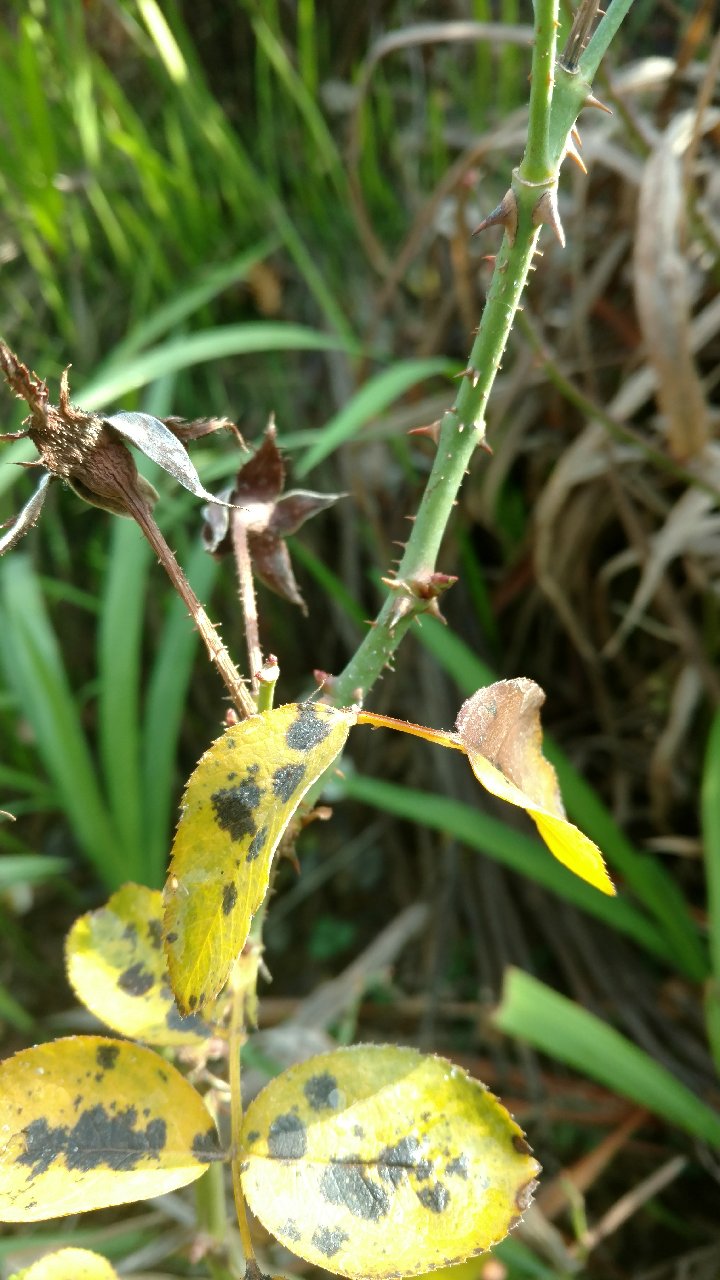
What happens when new leaves come out while the bush is still clinging to its old foliage? That new growth is super-prone to fungal infection.
Spores of powdery mildew, rust, black spot and other fungal disease are hiding on those old leaves — on and off the bush.
Record warm days are likely in the next week. That will speed up rose growth even more.
 |
|
These old leaves above must go! 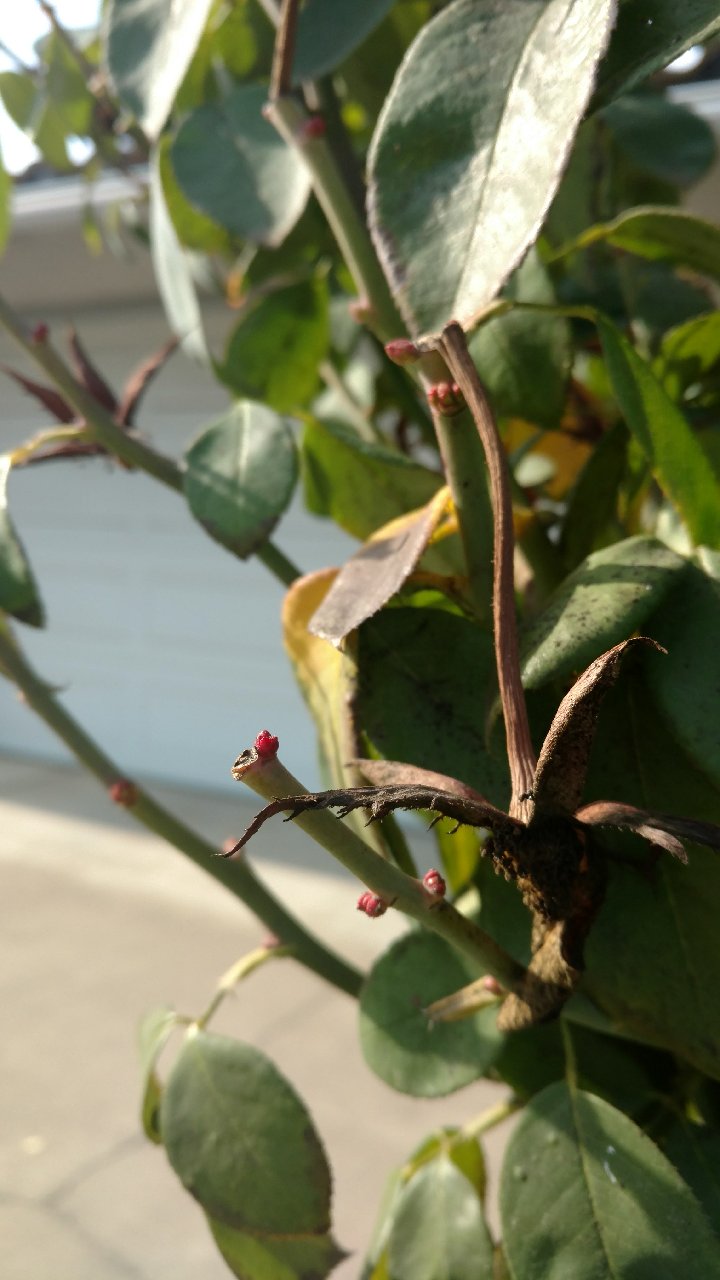
|
With that in mind, here are a few timely reminders for rose pruning:
* Prune tall. Even if pruning the bush down to just waist high, that’s something. Otherwise, new blooms may open far above your head. It’s hard to smell roses when your nose can’t reach them.
* Make your cut about 1/2 inch above a bud or node (where a leaf was attached) facing away from the center of the bush. That encourages outward growth and better air circulation, another way to cut down on fungal disease.
* Strip off ALL the old leaves. They carry problems and the bush needs room for new foliage.
* Pick up the old leaves and debris on the ground under and around the bush. That fallen foliage harbors more fungal disease.
* Change your mulch. This is important particularly if you had a bad outbreak of fungal disease or spider mites. Discard the old wood chips, etc., and replace with fresh mulch (such as wood chips, leaves or compost).
* Hold off on feeding your roses until February. It’s warm now, but that could change. If we suddenly plunge back into cold days and frosty nights, all that tender new growth can be at risk.
——
Note for newsletter readers:
Kathy in her shrub pruning post on Thursday mis-typed one of the common names of Podocarpus. It is fern pine, not fern palm, corrected on the blog but not in time for the newsletter. (Bad finger memory to blame!)
Funny thing is, that plant is not a pine, either, and even has been reclassified recently from
Podocarpus gracilior
to
Afrocarpus gracilior,
a new genus. So goes botanical naming!
Podocarpus gracilior
to
Afrocarpus gracilior,
a new genus. So goes botanical naming!