Painted ladies put on Central Valley show
 |
|
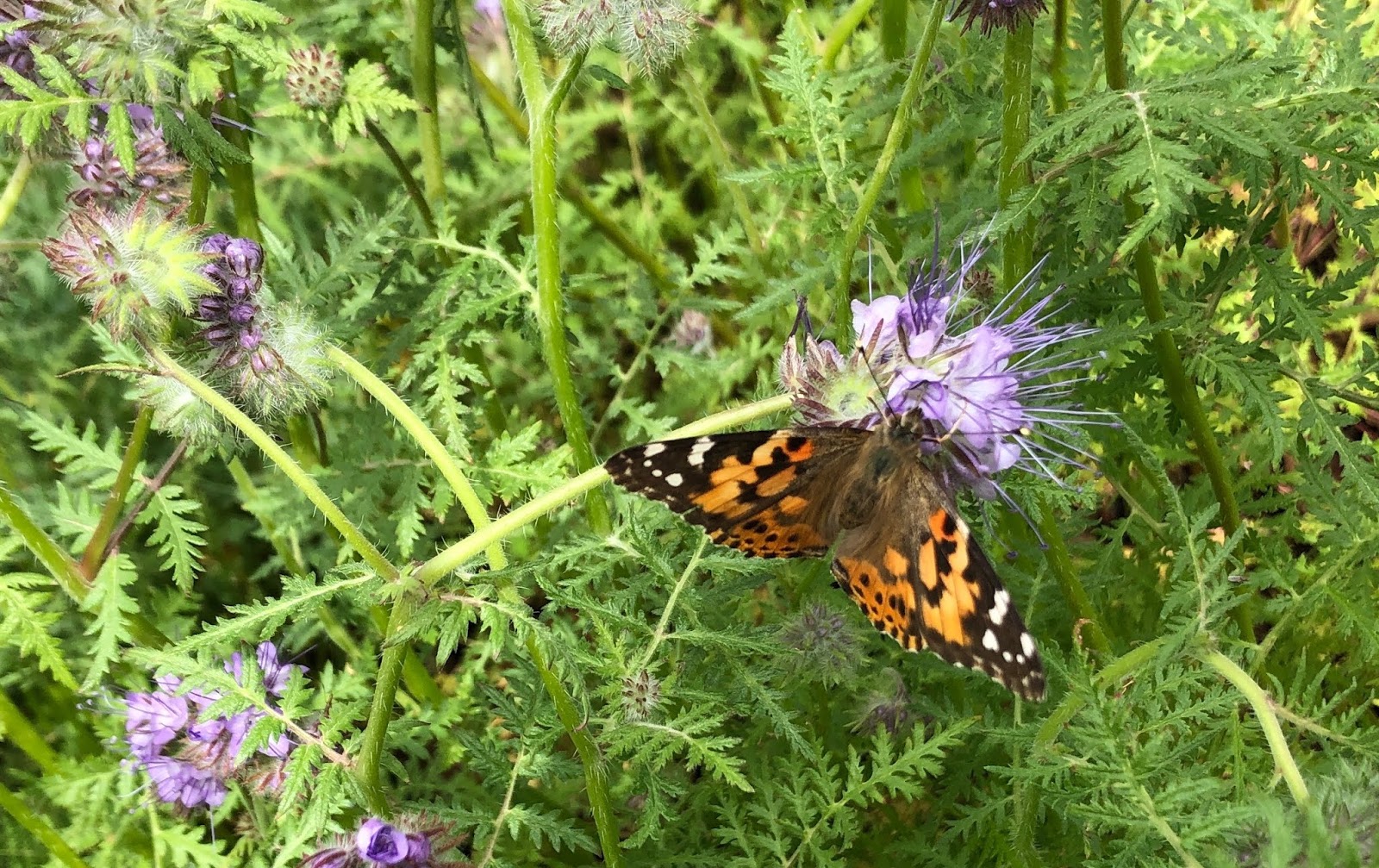
A painted lady butterfly rests on a lacy phacelia ( phacelia tanacetifolia ) at Elderberry Farms, Rancho Cordova. (Photo: Kathy Morrison) |
These butterflies have biggest year since 2005
A profusion of butterflies fluttered across the Sacramento area this month. Is it a return of the monarchs? No, it’s an invasion of painted ladies.
“This is the biggest painted lady year since 2005,” said butterfly expert Dr. Art Shapiro, professor of evolution and ecology at UC Davis.
These orange-and-black butterflies follow the flowers, and California’s massive Super Bloom drew them to the Central Valley.
Although millions of painted ladies have been moving through the Valley, it’s only about 15 percent of the 2005 butterfly count, Shapiro estimates. That year experienced the biggest Super Bloom ever recorded in California. All those wildflowers provided perfect conditions for painted ladies, which also can be found in Europe, Africa and Asia.
North America’s painted lady (
Vanessa cardui
) population winters in desert regions from Baja to West Texas.
“They mill around looking for places where rain has triggered large-scale germination of annual host plants,” Shapiro explained. “Because of the contingent nature of this, their enemies don’t know where they are, so they can build up huge numbers really fast.”
 |
|
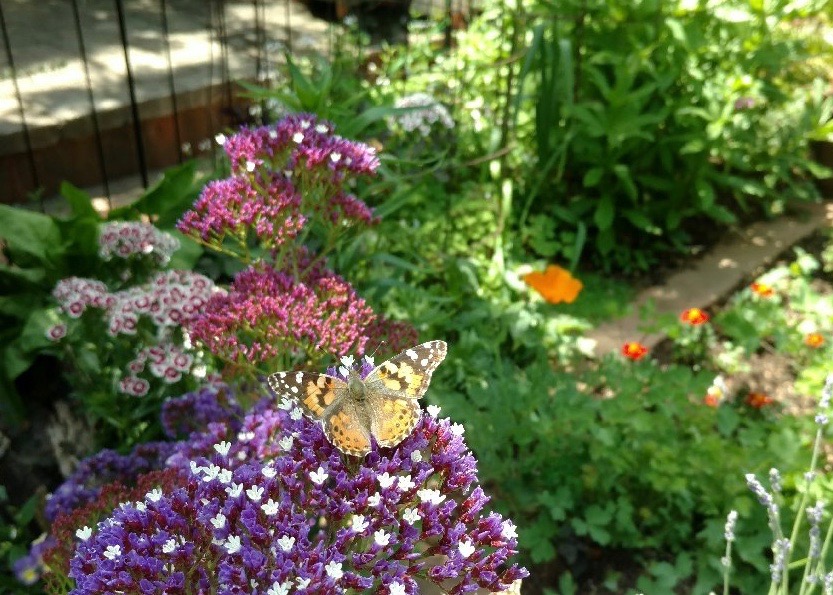
A painted lady butterfly alights in a midtown Sacramento garden. (Photo: Debbie Arrington) |
In addition to butterflies born near the border, more painted ladies are hatched along the way north in the Central Valley, creating a second wave.
“Usually there is a hiatus, but this year the migration from the desert segued directly into the migration of butterflies bred in Central California,” Shapiro said. “They have now been migrating for eight weeks; the first wave reached here March 17. The numbers vary daily as different batches from different source localities arrive and depart.”
Expect them to be finished with their Sacramento leg by Memorial Day. The Central California-born butterflies probably will end up breeding in Oregon or elsewhere in the Pacific Northwest. Their offspring (and their offspring’s offspring) will then head south to the desert to start the cycle over again.
“The southward migration is much less conspicuous and can drag on into early December some years,” Shapiro said. “It’s usually more abundant east of the Sierra than west. Rabbitbrush is a reliable nectar source for the southward migrants. They may line the roads in, say, Carson Valley and around Woodfords and Markleeville in October.”
Right now, painted ladies are enjoying May flowers in Sacramento.
“Painted ladies have one of the most diverse host-plant ranges of any Lepidopteran,” Shapiro said. “They are recorded from at least 30 plant families.”
Among their favorite flowers: Lantana, buddleia, escallonia, California buckeye, sunflower, borage, comfrey, lupine and sweet pea.
“One of the reasons they can build up their numbers so quickly is that, unlike monarchs, they can breed opportunistically on you-name-it,” Shapiro said. “(In butterfly terms), ‘When I’m not near the plant I eat, I eat the plant I’m near!’ ”
Learn more about painted ladies at Shapiro’s comprehensive butterfly website:
http://butterfly.ucdavis.edu
.
 |
|
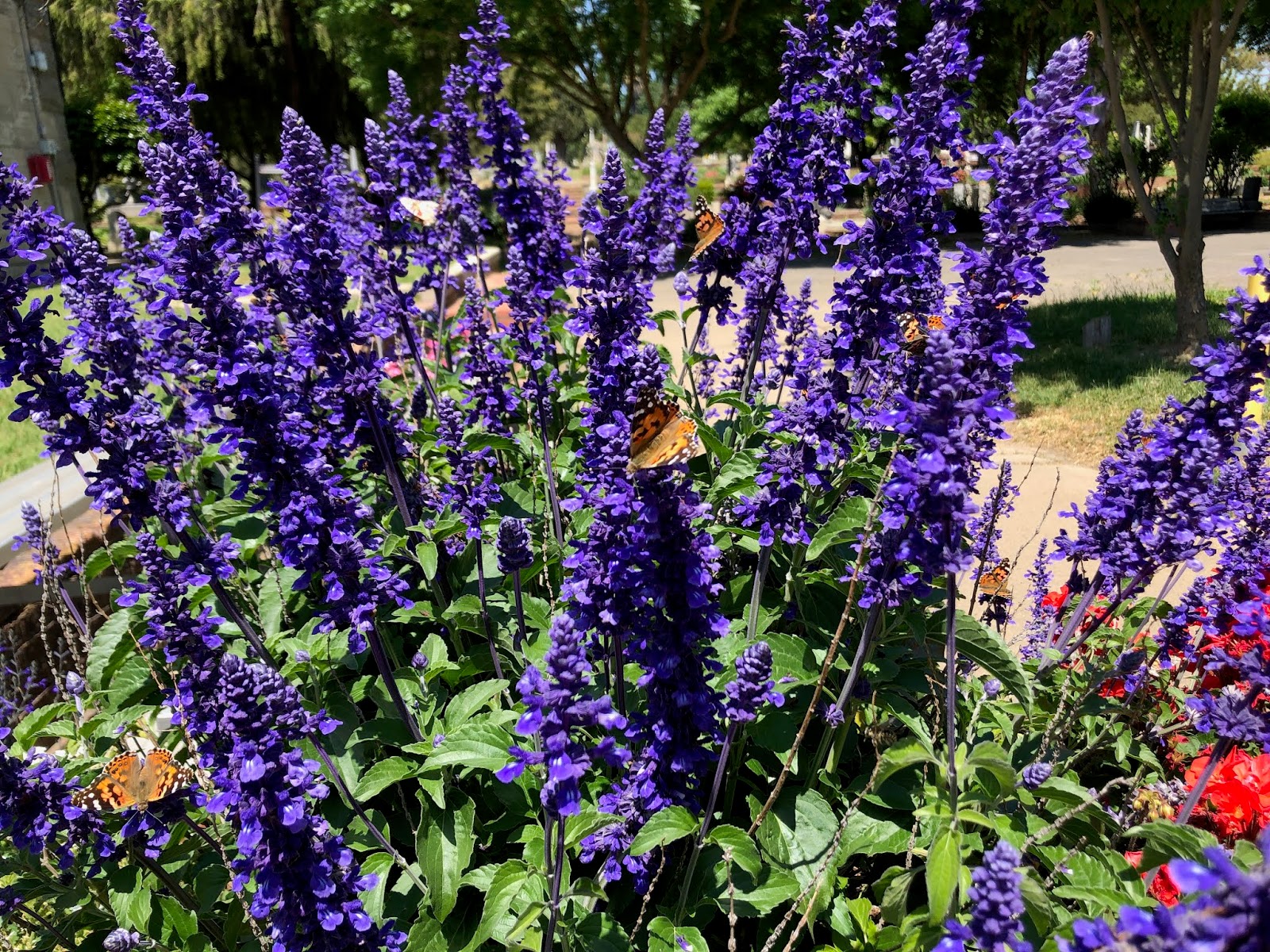
At least six painted ladies are fluttering through this salvia plant at the Sacramento Historic City Cemetery. (Photo: Kathy Morrison) |