Plant natives this fall, help wildlife year round
Make your landscape a favorite spot for songbirds and as well as bees, butterflies and other native wildlife.
Water-wise gardens not only save resources, they support local wildlife – especially in fall as seeds, nuts and berries ripen.
Landscapes studded with native plants aren’t only attractive to wildlife, they look good, too. Native perennials, shrubs and trees can provide fall color as well as food for feathered friends.
Fall also is the best time to transplant natives; fall planting gives them several months of cool weather (and hopefully rain) while their roots get established.
“Native plants and animals – bees, birds, butterflies, etc. – co-evolved at the same time,” explains Placer County master gardener Tece Markel, who oversees the pollinator beds at the master gardeners’ Loomis Library Demonstration Garden. “Native wildlife depends on specific plants for their survival. A lot of butterflies and moths, if they don’t have the right host plants, they have no caterpillars. That’s why we encourage people to plant natives in their yards.”
Caterpillars aren’t only vital for future butterflies and moths – all important pollinators – but for birds, too. “About 96 percent of North American birds rear their young on insects, mainly caterpillars; they’re soft and full of protein,” Markel says.
Some host plants are proven to attract butterflies to suburban gardens. For example, monarch butterflies are dependent on native milkweed species for their caterpillar nurseries. Pipevine swallowtails, as their name implies, need pipevines such as California’s native Dutchman’s pipe. The California dogface butterfly will only lay eggs on false indigo.
Native oak trees, considered keystone plants in Sacramento-area landscapes, provide habitat for moths and countless caterpillars, she notes. Their acorns also provide for other native wildlife such as scrub jays, yellow-billed magpies and acorn woodpeckers plus squirrels and other mammals.
Wildlife needs food year round. When planting natives, keep that idea in mind, Markel says.
“In fall, birds need to eat berries and seeds,” she explains. “Leave seed heads on plants; the birds will eat them.”
From an aesthetic viewpoint, berry-laden shrubs add color to the fall garden and can be a thing of beauty – especially from a birds’ eye view.
“In our area, elderberries are the number one fruit source for birds,” Markel notes. “They also have attractive flowers in spring.”
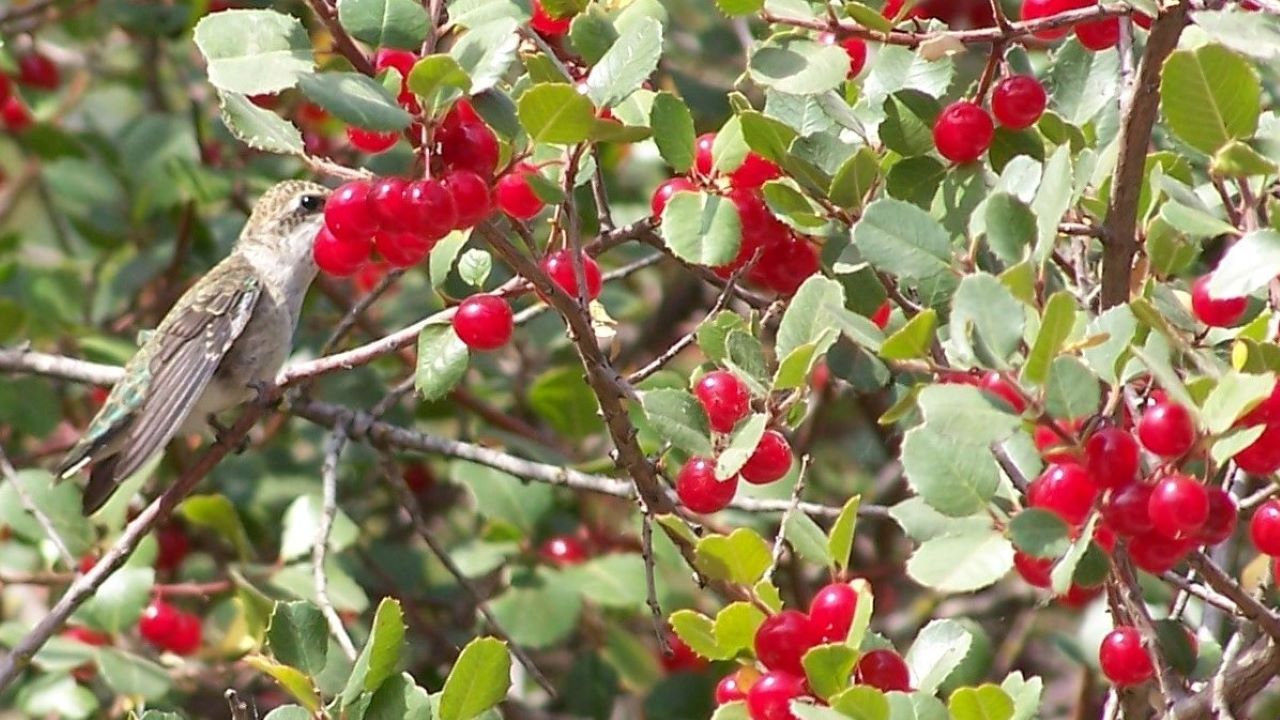
Other native plants that offer abundant fall berries include Oregon grape, native honeysuckle, toyon, hollyleaf cherry and coffeeberry. Besides feeding birds in fall, these plants support pollinators, too, with their spring and summer blooms.
Currants, gooseberries and manzanita are more excellent food sources that look good, too. “Manzanita blooms in very late fall, when hummingbirds start mating,” Markel explains. “Hummingbirds find insects inside their pendular flowers and feed them to their babies.”
Don’t forget fall flowers, Markel notes. “I encourage people to have something blooming all year. The pollinators are looking for flowers.”
Fall-flowering natives support pollinators with nectar during months when other food sources may be scarce, Markel adds. “Goldenrod is among the most important plants for fall-migrating butterflies. California fuchsia provides nectar for hummingbirds plus supports moths and butterflies, too.”
In her own garden, Markel plants natives that she’s seen grow at nearby Folsom Lake. “That makes them super-local natives,” she says.
As Markel hoped, local wildlife has found her local natives. “Buttonwillow has Sputnik-like flowers; I saw seven tiger swallowtails nectaring on it at the same time. I saw hairstreak butterflies nectaring on my California buckwheat. Rosy buckwheat is super popular with leaf cutter bees; I’ve seen 12 at a time on that plant. My favorite is coyote mint; it blooms a long time and is a great plant for butterflies and bees.
“It’s exciting to me,” she adds. “Plant it and they will come.”