FIMBY: Should you stock up on fertilizer? (Yes!)
This is another installment in our Food in My Back Yard series, dedicated to edible gardening.
Should you be stocking up on fertilizer? If you’re concerned about rising prices, the answer is likely, “Yes!”
From plastic pots to peat moss, America’s nursery industry – much like other U.S. businesses – is dependent on imports.
Which means the current turmoil surrounding tariffs could create some dramatic price increases and potential shortages for gardening consumers.
Topping that list is fertilizer. U.S. farmers (and the fertilizer industry) import 90% of their potash – the third of those macronutrients on any fertilizer bag. Almost all of that potash comes from Canada. The reason? It’s a mineral dependent on geology; North American potash mines are virtually all north of the border.
We use a lot of potash for growing food. In a 10-10-10 bag of balanced fertilizer, potash makes up about one-third of active ingredients (and 10% of the bag by weight).
Potash is essential for strong roots and stems, nutrient uptake and water retention. Plants need potash to fight disease, tolerate stress and increase yields.
There are no easy substitutes for that Canadian potash. In addition, we get huge amounts of nitrogen fertilizers and sulfur (a building block for proteins) from Canada.
Fertilizer expense represents more than 20% of farm crop costs, according to USDA statistics. That’s a fair estimate for backyard farmers, too.
Nursery pros expect fertilizer prices to rise dramatically by June or July as tariffs start to affect supply chains. Their advice: If you see a deal now, buy it.
Canada also is our major supplier of peat moss (necessary for lining hanging baskets, houseplant culture and other uses). The U.S. also imports 30% of its softwood products such as bark, wood chips and mulch from Canada.
Need new mulch or cedar chips? Get them now!
Thinking about a new fence, deck or raised beds? Wood prices are expected to go sky high this summer due to pressure not only from tariffs, but demand. California needs to rebuild more than 16,000 homes destroyed by January’s Los Angeles wildfires plus the whole state has been experiencing a building boom.
Canada and China are America’s major lumber suppliers. In 2023, the U.S. imported about $25 billion in lumber, $11.5 billion from Canada alone. Yes, California has lots of forests that could be “harvested” as a replacement for imported lumber, but that homegrown wood won’t be ready for this summer’s backyard projects. Don’t wait; get your wood now, too.
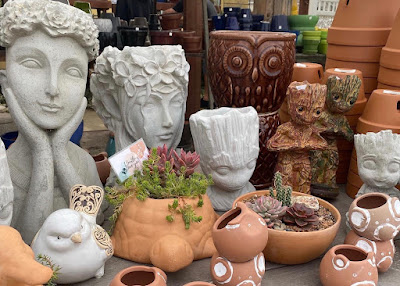
Decorative pots and other garden ware are overwhelmingly imported from China. (Most of the rest comes from Mexico.) All those items will go up in cost. If you have your eye on a fountain or birdbath, what are you waiting for?
Speaking of pots, the U.S. is the No. 1 importer of black plastic pots, a staple of every nursery. Most of those pots are made of recycled plastics in China. During the pandemic, supply chain issues caused shortages of black plastic pots for many nurseries, and another round of shortages – this time due to higher costs – is expected this summer.
Do your favorite nursery a favor and give them your old pots to recycle.