Twist between two classics: Grapefruit crème brûlée
My dwarf grapefruit tree really outdid itself this season, bearing dozens of fruit.
In search of more ideas on what to do with too many grapefruit, I cracked open my classic cookbooks. Among the few recipes I found was broiled grapefruit, which brought back memories of brunch with my grandmother. It’s a no-recipe recipe: Halve a fresh grapefruit, sprinkle with brown sugar (1 tablespoon per half) and pop under the broiler until the sugar melts and bubbles (about 2 minutes).
That reminded me of crème brûlée, one of my favorite desserts. Why not put grapefruit in the custard?
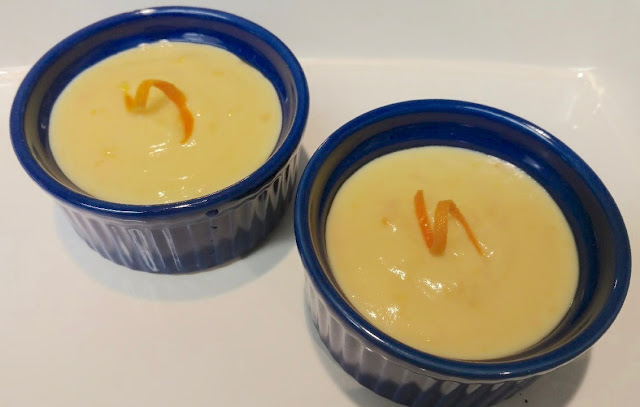
After some experimentation, the result was this very citrusy grapefruit crème brûlée with a brown sugar crust.
Sift the brown sugar to take out any lumps for a more even crust. Light brown sugar works best. Demerara brown sugar is extra crunchy. The crust has to be added just before serving. (Otherwise, it gets soggy.)
I used a small culinary torch to melt the brown sugar, which burns more easily than white sugar. (It’s the molasses.) It can be popped under the broiler, too, but watch carefully. (It only takes seconds to blacken.) Brûlée may mean “burned,” but that’s not the desired result.
Grapefruit crème brûlée with brown sugar topping
Makes 4 servings

as a large navel orange, right.
Ingredients:
¼ cup grapefruit juice
1 tablespoon zest
¼ cup granulated sugar
¾ cup heavy whipping cream
4 egg yolks
½ teaspoon vanilla
Boiling water
4 tablespoons light brown sugar
Grapefruit peel for garnish, optional
Instructions:
Preheat oven to 300 degrees F.

known as a bain-marie.
In a small saucepan, combine grapefruit juice, zest and sugar. Stir in cream.
Over medium heat, stirring often, heat cream-grapefruit mixture until warm and little bubbles appear around the edges. Take off the heat and set aside.
In a bowl, beat egg yolks and vanilla until smooth and light. Slowly stir warmed cream mixture into the egg yolks a little at a time, beating continuously.
Strain the cream-egg mixture through a fine sieve into a large measuring cup or bowl with a spout. Pour the custard mixture into four ramekins or small custard cups. Arrange the cups in a shallow cake pan or roasting pan.
Place the pan on the middle shelf of the preheated 300-degree oven. Add boiling water to the pan, so it comes halfway up the sides of the ramekins or custard cups. Loosely cover the pan with aluminum foil.
Bake for 30 to 40 minutes until the custard is just set.
Remove ramekins or cups from the hot water bath. Let cool a few minutes, then refrigerate until ready to eat. Chill at least two hours or up to three days (covered with plastic wrap).
Add brûlée topping just before serving:
Remove custards from refrigerator. Sprinkle 1 tablespoon of sifted brown sugar over each custard.
With a culinary torch, melt the brown sugar. Or, place custards in the broiler, at least 4 inches from flame. Broil 20 to 30 seconds and check if brown sugar is melted. Return to broiler a few more seconds if needed. Handle cups carefully; they’re hot.
Serve immediately with a twist of grapefruit peel, if desired.